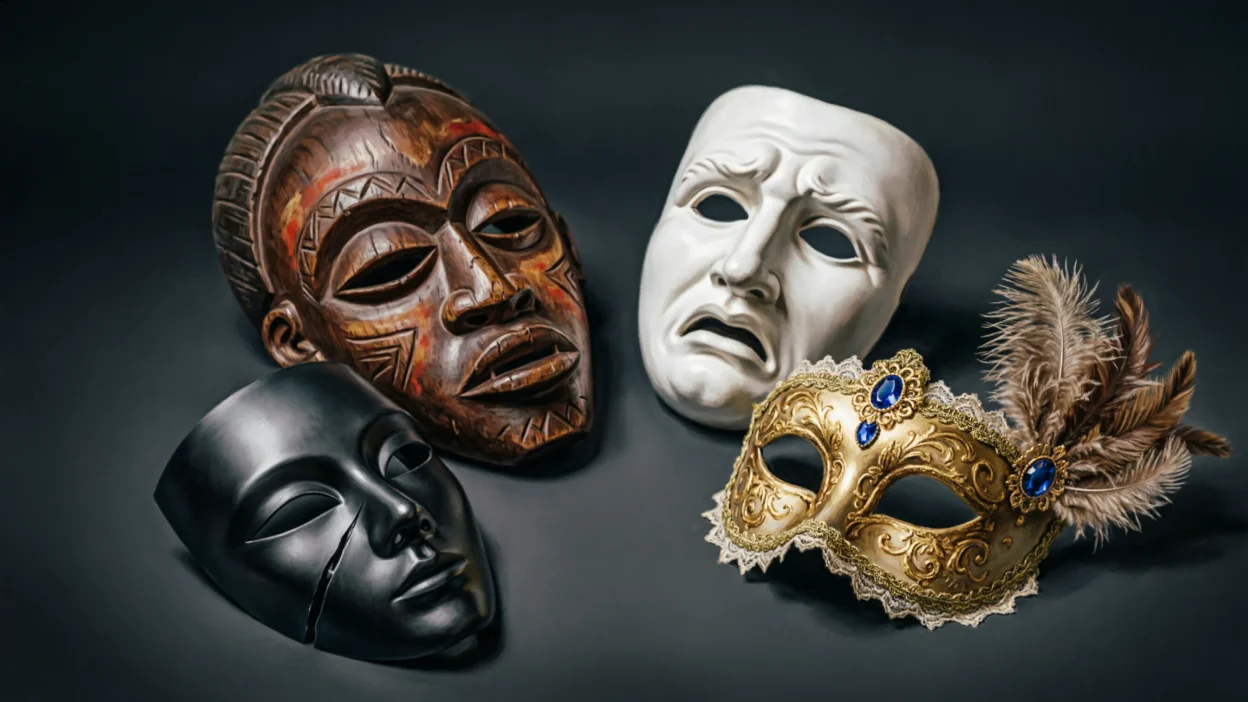
Mask symbolism has fascinated humanity for centuries, representing mystery, protection, transformation, and hidden identity.
From ancient rituals to modern psychology, masks carry deep symbolic meanings that reflect how people present themselves to the world.
Understanding mask symbolism helps explain cultural traditions, emotional expression, spirituality, and even everyday social behavior.
Mask Symbolism Meaning
Mask symbolism refers to the representation of concealment, identity, transformation, or protection through the image or use of a mask.
It often symbolizes the difference between outward appearance and inner reality. Masks can reflect secrecy, role-playing, emotional defense, or spiritual change depending on context.
Common associated concepts include:
- Hidden identity symbolism
- Disguise symbolism
- Transformation symbolism
- Cultural masks meaning
- Psychological masks
- Ritual mask symbolism
What Does Mask Symbolism Represent?
Masks can symbolize multiple ideas depending on culture, situation, or personal interpretation.
Key symbolic meanings
| Symbolic Aspect | What It Represents |
| Hidden identity | Concealing true feelings or personality |
| Transformation | Personal change or new roles |
| Protection | Emotional or spiritual defense |
| Social roles | How people adapt to expectations |
| Mystery | Unknown or secret aspects of life |
In daily life, people often “wear masks” metaphorically to fit social norms or protect emotions.
Spiritual Meaning of Mask Symbolism
Spiritually, masks often represent transformation and the journey between the physical and unseen world.
Many traditions use ceremonial masks during rituals to symbolize:
- Connection with spiritual forces
- Personal rebirth or growth
- Release from ego or identity limitations
- Protection from negative energy
Some spiritual interpretations see removing a mask as awakening to one’s authentic self.
Biblical / Religious Meaning of Mask Symbolism
While masks are not heavily emphasized in the Bible, the concept aligns with themes of sincerity and authenticity.
Symbolic religious interpretations include:
- Hypocrisy or false appearance contrasted with genuine faith
- Spiritual transformation and renewal
- Humility versus pride
Other religions, especially African, Asian, and Indigenous traditions, use masks in sacred ceremonies to represent ancestors, deities, or spiritual guardians.
Mask Symbolism in History and Culture
Throughout history, masks have served practical and symbolic roles.
Historical uses include:
- Ancient theater: Greek and Roman actors wore masks to express character and emotion.
- Ritual ceremonies: African, Native American, and Asian cultures used masks for spiritual storytelling.
- Festivals: Venetian carnival masks symbolized freedom from social hierarchy.
Cultural masks meaning often reflects identity, storytelling, and spiritual connection.
Mask Symbolism in Literature and Art
Writers and artists frequently use masks as metaphors for hidden truth and identity.
Common artistic themes include:
- Dual identity symbolism
- Emotional concealment
- Social conformity versus individuality
- Personal transformation
From classical drama to modern films, masks highlight the tension between authenticity and appearance.
Dream Meaning of Mask Symbolism
Dreaming about masks often reflects emotional or psychological themes.
Typical dream interpretations:
- Wearing a mask → Hiding feelings or protecting yourself
- Seeing someone masked → Uncertainty about trust or intentions
- Removing a mask → Desire for honesty or self-expression
Dream meaning varies based on context and personal emotions.
Modern Meaning of Mask Symbolism
Today, mask symbolism remains highly relevant.
Modern interpretations include:
- Psychological masks representing emotional defenses
- Social media personas as digital “masks”
- Public health masks symbolizing safety and responsibility
- Fashion or artistic expression
In contemporary life, masks often reflect identity, privacy, and self-expression.
FAQs About Mask Symbolism
What does mask symbolism generally mean?
Mask symbolism usually represents hidden identity, emotional protection, transformation, or social roles depending on cultural or personal context.
Is mask symbolism positive or negative?
It can be both. Masks may symbolize protection and growth or deception and concealment depending on interpretation.
What does dreaming of a mask mean?
It often reflects hidden emotions, self-protection, or uncertainty about someone’s true intentions.
Why are masks important in culture?
Masks preserve traditions, express identity, and connect communities to history, spirituality, and storytelling.
Conclusion
Mask symbolism reminds us that identity has layers. Whether used in rituals, art, psychology, or daily life, masks reflect both protection and transformation — encouraging authenticity while honoring the complexity of human expression.

“Alex Fokes is a visionary entrepreneur and tech enthusiast, dedicated to exploring innovation, digital trends, and creative solutions. He shares insights to educate and inspire audiences globally.”