
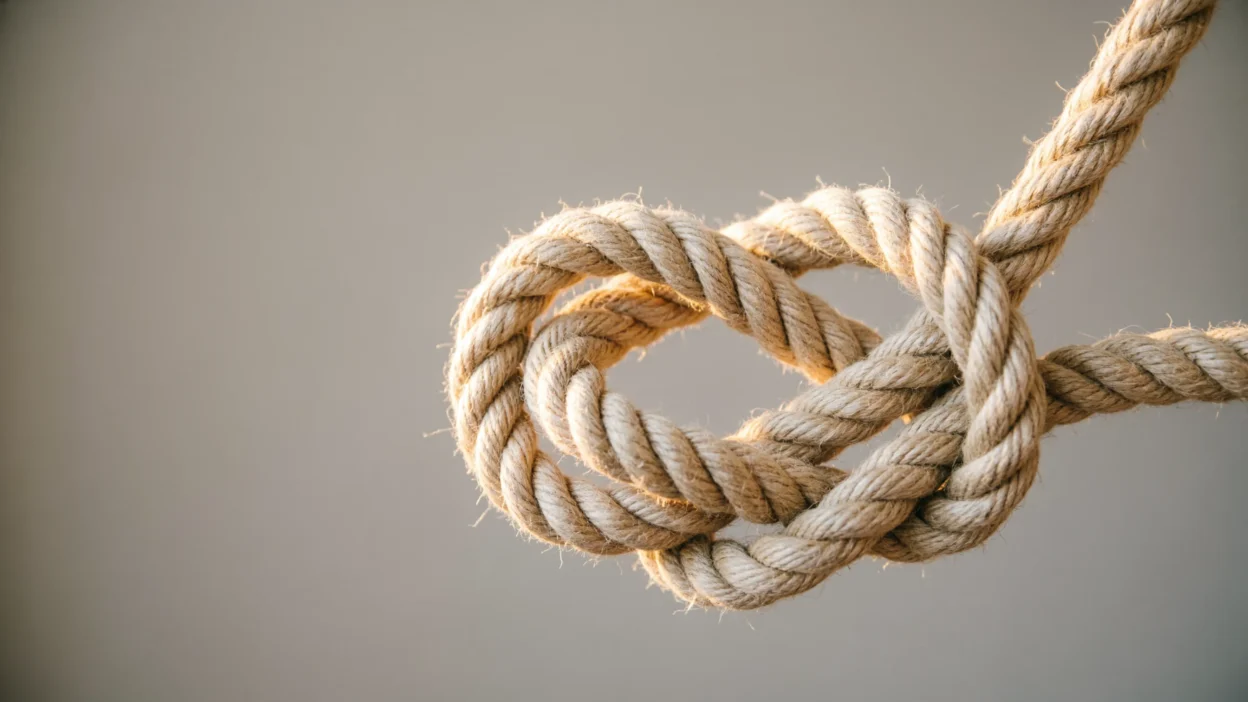
Rope symbolism has fascinated cultures, religions, and artists for centuries. A simple rope can represent strength, unity, restriction, or guidance depending on context.
Understanding rope symbolism helps reveal deeper emotional, spiritual, and cultural meanings tied to everyday objects — reminding us how connection, resilience, and balance shape human life.
Rope Symbolism Meaning
Rope symbolism refers to the symbolic meanings associated with rope — commonly representing connection, strength, unity, limitation, or support.
Because ropes bind, secure, pull, and protect, they naturally symbolize both positive and challenging aspects of human experience.
Common symbolic meanings of rope:
| Symbolic Aspect | Meaning |
| Connection | Relationships, unity, teamwork |
| Strength | Resilience, endurance |
| Binding | Commitment or restriction |
| Guidance | Safety, direction |
| Support | Stability, trust |
What Does Rope Symbolism Represent?
Rope symbolism often reflects how people connect with each other and navigate life.
Key interpretations include:
- Unity and connection: Like knots tying strands together, ropes symbolize relationships and cooperation.
- Strength and resilience: A strong rope represents endurance through difficulties.
- Control or limitation: Being tied can symbolize restriction or responsibility.
- Security and safety: Ropes anchor ships and climbers, symbolizing stability.
- Journey and teamwork: Pulling together shows shared goals.
These meanings often appear in discussions of symbolic knots, binding symbolism, strength symbolism, spiritual connection symbolism, and restraint symbolism.
Spiritual Meaning of Rope Symbolism
Spiritually, rope symbolism frequently relates to connection between physical and spiritual realms.
Many traditions interpret rope as:
- A lifeline between worlds — linking the human and divine.
- A symbol of karma or destiny, suggesting ties formed through actions.
- Representation of interconnectedness, reminding us that lives are linked.
- A metaphor for personal growth, where knots symbolize lessons.
This perspective encourages mindfulness, unity, and inner strength.
Biblical / Religious Meaning of Rope Symbolism
Rope symbolism appears in several religious teachings.
Examples include:
- Scarlet cord of Rahab (Bible): A symbol of protection, faith, and salvation.
- Binding imagery: Represents covenant, commitment, or obedience.
- Spiritual lifeline: Some teachings describe faith as something that “holds” believers.
Across faith traditions, ropes often symbolize trust, divine connection, or moral responsibility.
Rope Symbolism in History and Culture
Historically, rope symbolism has practical and ceremonial importance.
Examples include:
- Sailors and explorers: Ropes represented survival and teamwork.
- Marriage rituals: Knot-tying symbolizes union and commitment.
- Punishment imagery: Sometimes associated with justice or consequence.
- Craft traditions: Rope-making symbolized patience and skill.
These interpretations shaped folklore, proverbs, and cultural rituals worldwide.
Rope Symbolism in Literature and Art
Writers and artists often use rope symbolism to express emotional and philosophical themes.
Common artistic uses:
- Connection between characters — relationships or obligations.
- Conflict or captivity — emotional or social restrictions.
- Hope and rescue — a rope pulling someone to safety.
- Life’s complexity — tangled ropes representing challenges.
Visual art, poetry, and theater frequently rely on these symbolic layers.
Dream Meaning of Rope Symbolism
Dreaming about ropes can carry different interpretations depending on context.
Typical meanings include:
- Climbing a rope: Progress, ambition, personal growth.
- Being tied: Feeling restricted or overwhelmed.
- Holding a rope: Seeking support or stability.
- Broken rope: Fear of losing control or connection.
Dream symbolism often reflects emotional states rather than literal events.
Modern Meaning of Rope Symbolism
Today, rope symbolism continues evolving in everyday life.
Modern interpretations include:
- Teamwork and collaboration in workplaces.
- Mental resilience during personal struggles.
- Social connections in an increasingly digital world.
- Adventure and challenge through climbing or sailing.
The rope remains a strong metaphor for connection, balance, and perseverance.
FAQs About Rope Symbolism
What does rope symbolism generally mean?
It usually represents connection, strength, unity, restriction, or support depending on context.
Is rope symbolism positive or negative?
It can be both — symbolizing security and unity or limitation and control.
What does dreaming of rope symbolize?
Often emotional ties, personal struggles, ambition, or need for stability.
Does rope symbolism appear in religion?
Yes, many traditions use rope imagery for faith, protection, commitment, or spiritual connection.
Why is rope associated with unity?
Because multiple strands combine into one strong cord, symbolizing cooperation and shared strength.
Conclusion
Rope symbolism beautifully reflects life itself — connections that support us, challenges that test us, and bonds that shape our journey.
Whether spiritual, cultural, or personal, the image of a rope reminds us that strength often comes from unity and resilience.

“Martain Cooper, founder and author of Symbobuz.com, is a passionate technology enthusiast and writer, sharing insights on innovation, digital trends, and creative solutions to inspire readers worldwide.”