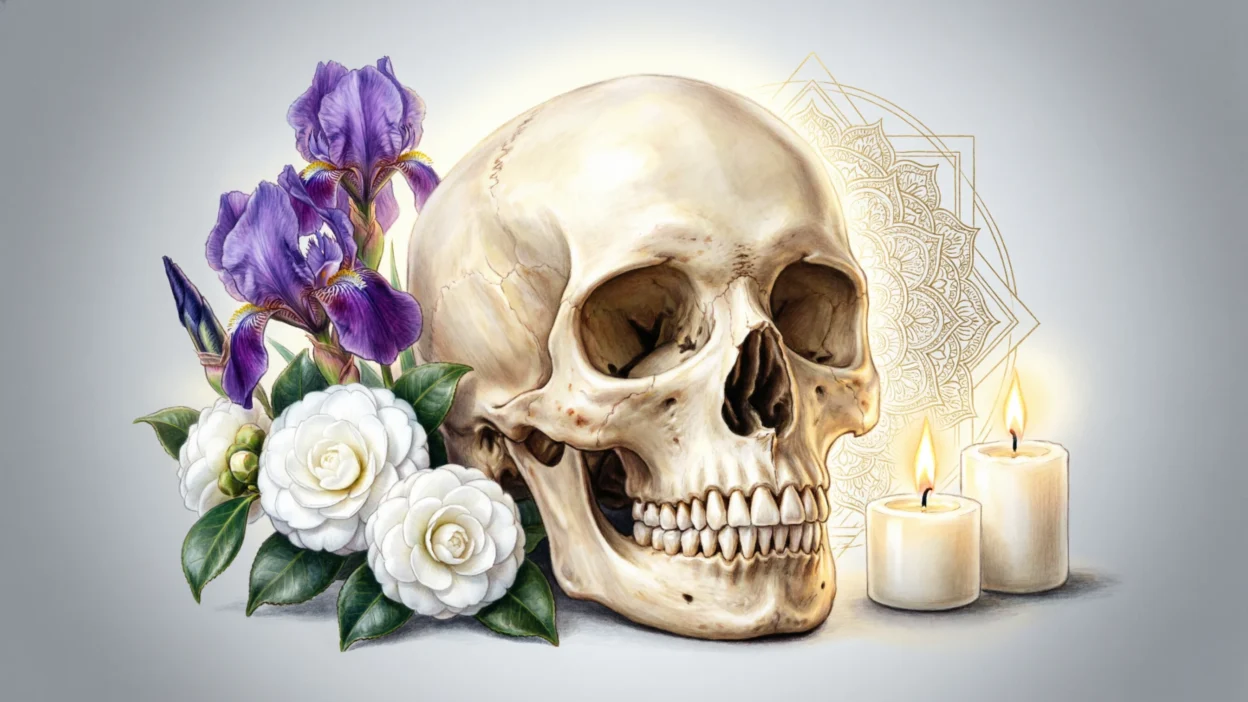
Skull symbolism has fascinated humanity for centuries, appearing in art, religion, fashion, and spiritual traditions worldwide.
While many people associate skulls with death, the deeper meaning of skull symbolism often reflects transformation, protection, wisdom, and the cycle of life.
Understanding these layers helps reveal why the skull remains one of the most enduring and meaningful symbols across cultures.
Skull Symbolism Meaning
Skull symbolism refers to the symbolic use of a human skull to represent mortality, transformation, protection, or deeper spiritual awareness.
At its core, the skull reminds us of life’s fragility while also symbolizing resilience, rebirth, and inner strength. It can signify both an ending and a new beginning.
What Does Skull Symbolism Represent?
Skull symbolism carries multiple interpretations depending on cultural, artistic, or personal contexts.
Common symbolic meanings:
| Symbolic Meaning | Interpretation |
| Mortality | Reminder of life’s temporary nature |
| Transformation | Personal change, rebirth, renewal |
| Protection | Spiritual guarding or warding off negativity |
| Wisdom | Knowledge gained through experience |
| Equality | All humans share the same fate |
| Strength | Courage in facing fears |
These interpretations explain why skull imagery appears in tattoos, jewelry, rituals, and cultural celebrations.
Spiritual Meaning of Skull Symbolism
Spiritually, skull symbolism often represents awakening and transformation. It encourages reflection on life’s deeper purpose rather than fear of death.
Many traditions view skulls as:
- Symbols of rebirth and renewal
- Reminders of ego release
- Guides toward spiritual awareness
- Protective spiritual emblems
In meditation or symbolic art, skull imagery can inspire acceptance of change and personal growth.
Biblical / Religious Meaning of Skull Symbolism
In Christianity, skull symbolism frequently connects with mortality and humility. The skull at the crucifixion site, Golgotha (“place of the skull”), symbolizes both death and redemption.
Other religious interpretations include:
- Memento mori tradition: Reminder to live righteously
- Buddhist symbolism: Impermanence of physical existence
- Hindu imagery: Power, destruction, and transformation (often linked to deities like Kali)
These meanings emphasize reflection rather than fear.
Skull Symbolism in History and Culture
Across history, skull symbolism has appeared in rituals, celebrations, and artistic traditions.
Cultural examples:
- Day of the Dead (Mexico): Sugar skulls celebrate ancestors and honor life.
- Pirate imagery: Warning, danger, and rebellion.
- Ancient warrior cultures: Strength and victory symbols.
- Medieval Europe: Reminders of mortality during plagues.
Such diverse uses highlight how skull symbolism reflects both fear and celebration of life.
Skull Symbolism in Literature and Art
Writers and artists often use skull imagery to express deep philosophical themes.
Common artistic themes include:
- Mortality and fleeting life (Shakespeare’s Hamlet)
- Transformation and rebirth in modern art
- Gothic aesthetics and emotional introspection
- Fashion symbolism reflecting rebellion or individuality
Skull symbolism in art often invites contemplation rather than dread.
Dream Meaning of Skull Symbolism
Seeing skull symbolism in dreams usually relates to inner transformation or confronting fears.
Possible dream interpretations:
- Personal change or life transition
- Letting go of past habits
- Awareness of mortality
- Hidden wisdom emerging
Dream context matters greatly; emotions felt during the dream guide interpretation.
Modern Meaning of Skull Symbolism
Today, skull symbolism blends tradition with contemporary expression.
Modern associations include:
- Fashion and self-expression
- Tattoo symbolism (strength, resilience)
- Pop culture aesthetics
- Motivational reminder to live fully
Rather than fear, modern skull symbolism often represents courage, authenticity, and embracing life’s reality.
FAQs About Skull Symbolism
Is skull symbolism always negative?
No. While linked to death, skull symbolism often represents transformation, protection, wisdom, and life’s natural cycles.
What does a skull symbolize spiritually?
Spiritually, skull symbolism reflects rebirth, awareness, impermanence, and personal growth through transformation.
Why are skulls popular in art and tattoos?
They express individuality, resilience, acceptance of mortality, and philosophical reflection on life.
Does skull symbolism vary across cultures?
Yes. Some cultures celebrate life through skull imagery, while others emphasize mortality or spiritual protection.
Conclusion
Skull symbolism ultimately reminds us of life’s impermanence while encouraging courage, transformation, and deeper appreciation for existence. Rather than fear, it invites reflection, growth, and awareness of what truly matters.