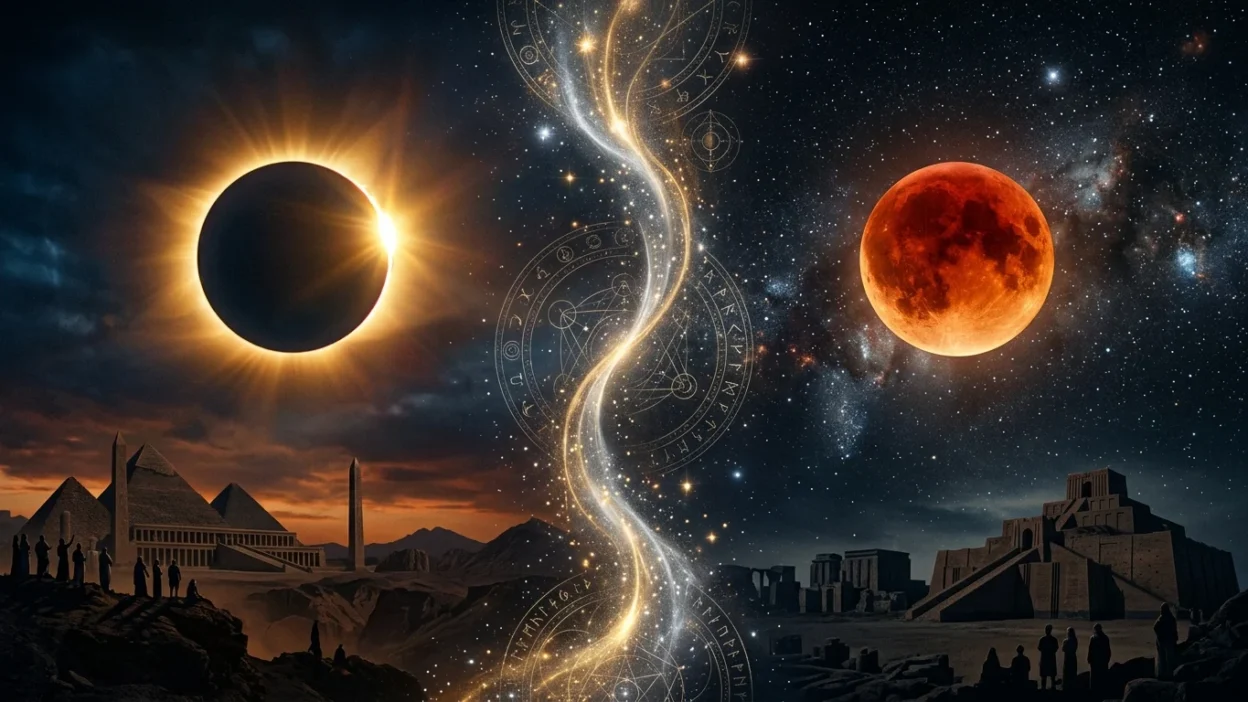
Eclipse symbolism has fascinated humanity for thousands of years, representing mystery, transformation, and powerful cosmic change. When the sun or moon is temporarily obscured, people across cultures have looked for meaning in this rare celestial event. The symbolism of eclipses continues to inspire spiritual reflection, astrology interpretations, and artistic expression today.
At its core, eclipse symbolism reflects moments when light is hidden, encouraging us to look inward and understand deeper truths about life, change, and renewal.
Eclipse Symbolism Meaning
Eclipse symbolism refers to the spiritual, cultural, and psychological meanings associated with a solar eclipse or lunar eclipse. In simple terms, it represents a temporary blocking of light often interpreted as a period of uncertainty, transformation, or hidden truths coming to the surface.
In both solar eclipse meaning and lunar eclipse meaning, the event is seen as a powerful shift where old patterns end and new ones begin.
What Does Eclipse Symbolism Represent?
Eclipse symbolism generally represents major life transitions and inner transformation. It is often associated with:
- Sudden change or disruption
- Hidden emotions or truths
- Spiritual awakening
- Endings and new beginnings
- Karmic cycles and destiny shifts
Secondary symbolic themes include cosmic alignment, shadow self awareness, and emotional cleansing.
Spiritual Meaning of Eclipse Symbolism
Spiritually, eclipse symbolism is deeply connected to transformation and rebirth. Many believe eclipses act as cosmic reset points, helping individuals release old energy and step into new versions of themselves.
Key spiritual meanings include:
- Awakening of inner consciousness
- Release of negative energy
- Heightened intuition and awareness
- Personal growth through challenge
- Alignment with life purpose
In astrology, eclipses are often seen as turning points that accelerate fate and personal evolution.
Biblical / Religious Meaning of Eclipse Symbolism
In religious traditions, eclipses have often been viewed as signs of divine power or messages from the universe. In some biblical interpretations, darkness during the day is associated with warnings, judgment, or significant spiritual events.
Across different faiths, eclipse symbolism may represent:
- Divine intervention or communication
- Moments of reflection and repentance
- The temporary triumph of darkness before restoration of light
While interpretations vary, eclipses are consistently seen as meaningful rather than ordinary events.
Eclipse Symbolism in History and Culture
Throughout history, eclipses have been interpreted as powerful omens. Ancient civilizations often feared them, believing they signaled major world changes.
Common historical beliefs include:
- A dragon or creature “swallowing” the sun or moon
- Signs of war, famine, or leadership change
- Sacred moments requiring rituals or protection
In many cultures, eclipses were carefully observed and recorded, strengthening their role in mythology and astronomy.
Eclipse Symbolism in Literature and Art
In literature and art, eclipse symbolism is often used to represent emotional intensity, transformation, or hidden truth. Writers and artists use eclipses to symbolize:
- Internal conflict or identity crisis
- Romantic separation or reunion
- The battle between light and darkness
- Moments of revelation
Eclipses create powerful visual and emotional metaphors that enhance storytelling depth.
Dream Meaning of Eclipse Symbolism
Dreaming of an eclipse often reflects subconscious emotional or spiritual change. It may indicate confusion, transition, or awakening.
Common dream interpretations include:
- Feeling uncertain about life direction
- Experiencing emotional transformation
- Facing hidden fears or truths
- Preparing for a major life shift
A solar eclipse in dreams often relates to external life changes, while a lunar eclipse connects more with emotions and intuition.
Modern Meaning of Eclipse Symbolism
In modern interpretations, eclipse symbolism is strongly linked to personal growth, astrology, and self awareness. People view eclipses as opportunities for reflection and resetting life goals.
Today, eclipses are associated with:
- Emotional healing and release
- Breakthrough moments
- Life changing decisions
- Spiritual and psychological transformation
Astrologically, eclipses are considered powerful catalysts for change, often marking the beginning or end of important life chapters.
Symbolic Meanings of Eclipse Symbolism
| Aspect | Symbolic Meaning |
| Solar Eclipse | Sudden external change, ego reset |
| Lunar Eclipse | Emotional release, intuition awakening |
| Darkness | Hidden truths, uncertainty |
| Light Return | Renewal, clarity, hope |
| Cosmic Alignment | Destiny shifts, life transitions |
| Shadow Energy | Inner fears, self discovery |
FAQs About Eclipse Symbolism
What is the main meaning of eclipse symbolism?
Eclipse symbolism mainly represents transformation, change, and the revealing of hidden truths during important life transitions.
Is eclipse symbolism positive or negative?
It can be both, depending on interpretation. It often signals challenging but ultimately positive growth and renewal.
What does a solar eclipse symbolize spiritually?
A solar eclipse symbolizes external change, new beginnings, and shifts in identity or direction.
What does a lunar eclipse represent?
A lunar eclipse represents emotional release, healing, and increased intuition or self awareness.
Why are eclipses considered powerful in symbolism?
Eclipses combine light and darkness, making them strong symbols of balance, transformation, and cosmic change.
Conclusion
Eclipse symbolism continues to hold deep meaning across cultures, spirituality, and personal reflection. Whether viewed as a cosmic event or a spiritual metaphor, eclipses remind us that even moments of darkness can lead to powerful renewal and clarity.