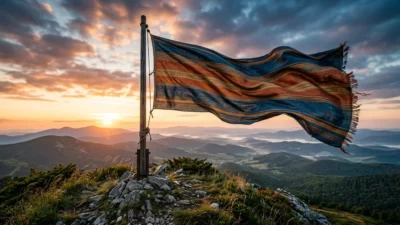
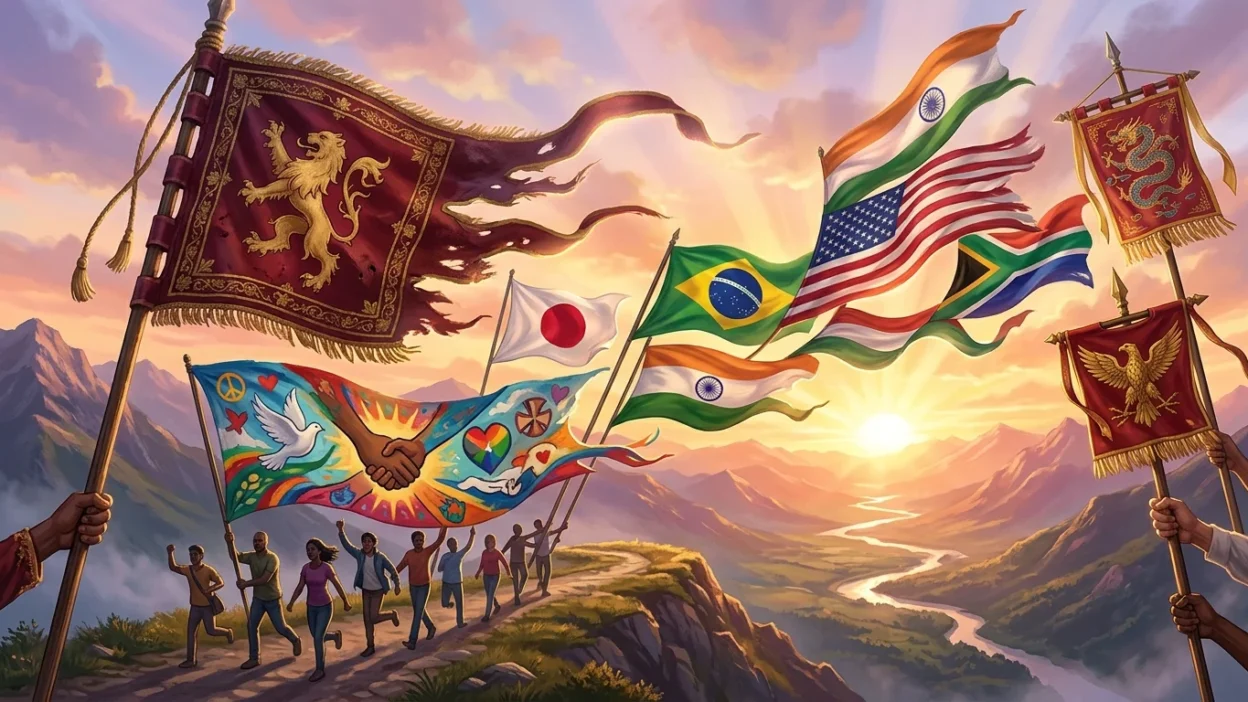
Banner symbolism carries deep meaning across cultures, history, and personal expression. Whether seen in flags, protest signs, or ceremonial displays, banners represent identity, unity, and purpose. Understanding banner symbolism helps us decode messages that go beyond words messages of pride, belief, and shared vision.
Banner Symbolism Meaning
Banner symbolism refers to the use of banners cloth signs, flags, or visual displays as symbols that communicate ideas, values, or identity.
In simple terms, a banner is more than decoration. It acts as a visual message representing a group, belief, cause, or achievement.
What Does Banner Symbolism Represent?
Banner symbolism can represent a wide range of meanings depending on context. Common interpretations include:
- Identity and belonging – National flags, team banners, or family crests
- Victory and achievement – Military or sports triumphs
- Unity and solidarity – Protest banners or social movements
- Authority and power – Royal or governmental emblems
- Expression and communication – Messages displayed publicly
Summary of Common Symbolic Meanings
| Symbolic Aspect | Meaning |
| Identity | Represents a group, nation, or community |
| Unity | Brings people together under one cause |
| Victory | Celebrates success or conquest |
| Expression | Shares messages or beliefs publicly |
| Authority | Signals leadership or control |
Spiritual Meaning of Banner Symbolism
Spiritually, banner symbolism often reflects protection, divine guidance, and purpose.
In many traditions, banners are seen as:
- A sign of spiritual identity
- A symbol of being guided or protected
- A reminder of one’s higher mission or calling
For example, lifting a banner can symbolize rising above challenges or declaring faith and intention.
Biblical / Religious Meaning of Banner Symbolism
In religious contexts, especially in biblical references, banners hold powerful significance.
One notable concept is the idea of a divine banner representing God’s presence and protection. Banners in scripture often symbolize:
- Victory through faith
- Divine leadership
- Spiritual refuge
They are used metaphorically to show that believers are united under a higher power.
Banner Symbolism in History and Culture
Throughout history, banner symbolism has played a central role in shaping identity and communication.
Historical Uses:
- War banners identified armies and inspired soldiers
- Royal standards represented kings and kingdoms
- Tribal flags marked territories and heritage
Cultural Significance:
- Festivals use banners to express joy and tradition
- Political movements rely on banners for visibility and messaging
- National flags serve as powerful symbols of patriotism
Banners have always been tools of visual storytelling, carrying meaning across generations.
Banner Symbolism in Literature and Art
In literature and art, banner symbolism is often used to represent deeper emotional or thematic elements.
Writers and artists use banners to symbolize:
- Hope or rebellion in storytelling
- Identity struggles or personal transformation
- Victory or defeat in dramatic narratives
In visual art, banners can add layers of meaning by highlighting themes like power, unity, or resistance.
Dream Meaning of Banner Symbolism
Seeing a banner in a dream can carry symbolic messages from the subconscious.
Common interpretations include:
- Raising a banner – Confidence, ambition, or readiness to lead
- Torn or falling banner – Loss of identity or direction
- Colorful banner – Celebration, joy, or success
- Blank banner – Uncertainty or searching for purpose
Dreams involving banner symbolism often relate to how you express yourself or align with a group or belief.
Modern Meaning of Banner Symbolism
Today, banner symbolism continues to evolve in digital and real world spaces.
In Modern Contexts:
- Online banners represent branding and identity
- Protest signs symbolize activism and social change
- Event banners communicate celebration and purpose
In a fast paced world, banners remain powerful because they deliver clear, visual messages instantly.
FAQs About Banner Symbolism
What is banner symbolism in simple terms?
Banner symbolism is the use of banners or flags to represent ideas, identity, or messages visually.
Why are banners important in culture?
Banners help express shared values, traditions, and identity, making them powerful tools for unity and communication.
What does a banner symbolize spiritually?
Spiritually, a banner often represents protection, guidance, and alignment with a higher purpose.
What does it mean to see a banner in a dream?
It usually reflects self expression, identity, or a desire to stand for something important.
How is banner symbolism used today?
It appears in branding, advertising, activism, and events to communicate messages quickly and clearly.
Conclusion
Banner symbolism remains a timeless and powerful form of expression. From ancient battlefields to modern digital screens, banners continue to represent identity, unity, and purpose. Understanding their symbolism allows us to see the deeper messages behind these simple yet meaningful displays.

“Martain Cooper, founder and author of Symbobuz.com, is a passionate technology enthusiast and writer, sharing insights on innovation, digital trends, and creative solutions to inspire readers worldwide.”